
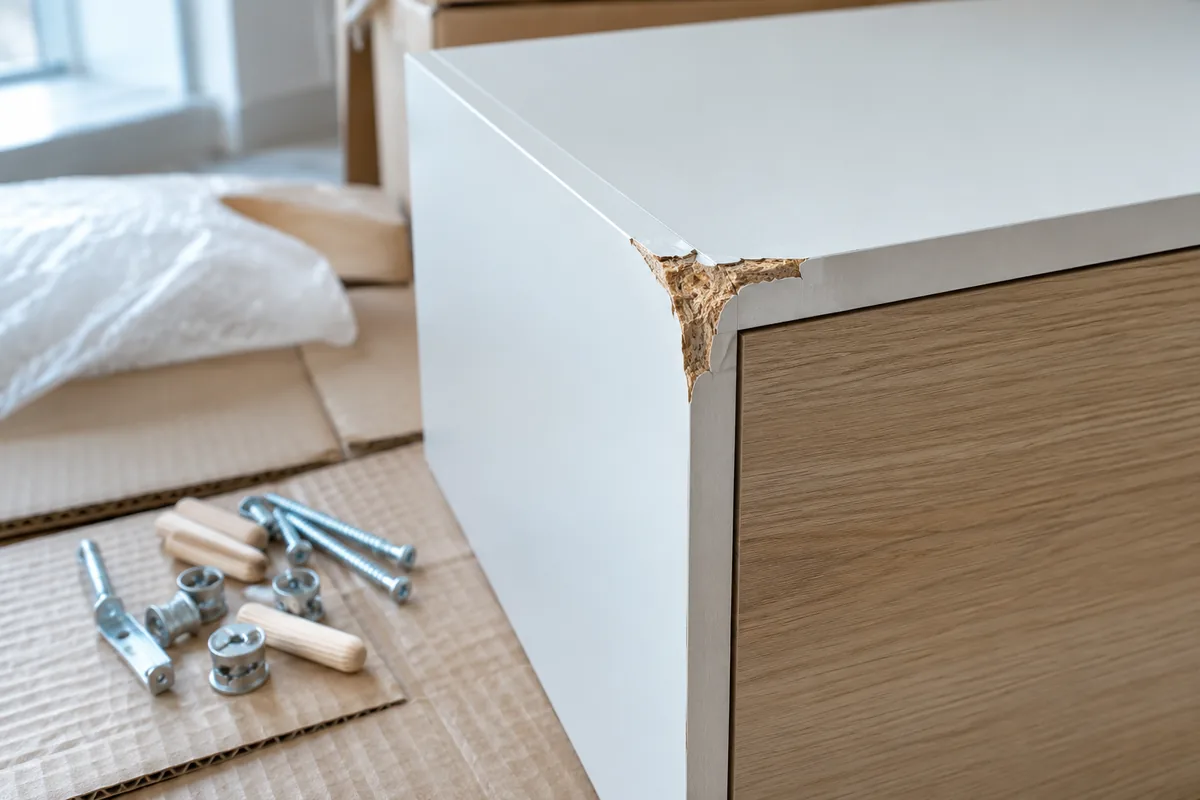
Record the stage when the defect was discovered
The object is in different states during receipt, unpacking and assembly. It helps to record when the defect was first noticed, who was present and which operations had already been completed. Late discovery should not automatically be treated as late occurrence, but the reverse conclusion also requires evidence.
What helps with comparison
- Overall views of the furniture and the damaged part.
- Photos of packaging and protective elements.
- Assembly diagram, order and handover documents.
- Known history of adjustments, repair and movement.
An indicator on a part is assessed in relation to its design and the available history. Resemblance to a typical transport chip does not, on its own, establish which particular party is responsible.
Do not repaint or glue the area before the inspection is agreed. If this has already been done, provide details of the intervention. Limitations in the source data must remain explicit in conclusions on cause and cost.
On this subject: Furniture after delivery: distinguishing transport damage from assembly defects.